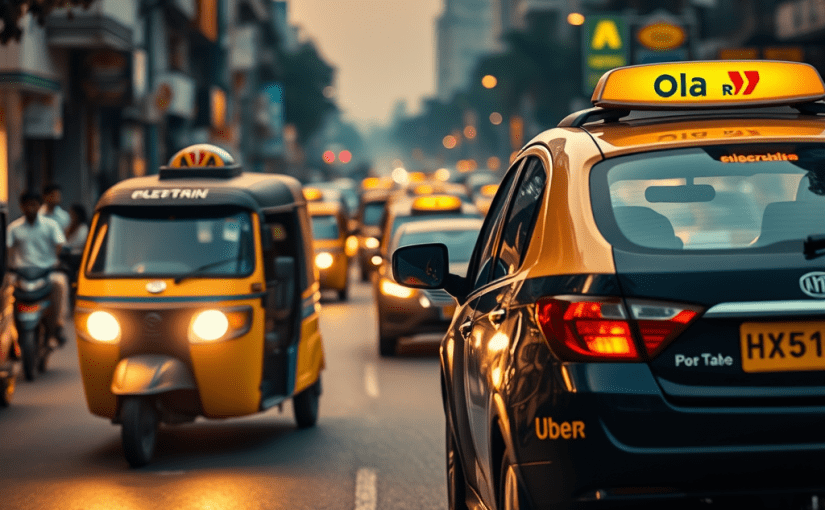
We all were used to good comfortable rides in Ola & Uber. The convenience, safety, AC, comfort, etc. all in all it was a dream come true about 8~10 years back. Majority of customers shifted from extorting Auto-Rickshaws to these Cabs. As a cherry on top, you need not plan the trip or hold the taxi for day it was a point-to-point connectivity. This looked like and amazing Win-Win model for all, Drivers, Customers & the company. So, what has gone wrong in last 3~4 years that all the pieces of this amazing puzzle are falling apart.
Let’s deep dive to understand. For context let’s start from the very Start.
India was primarily an Auto commute economy, so majority of people used to use Auto rikshaw / Tuk Tuk as the means for last mile connectivity. For the more privileged or corporate people there was always some neighbouring travel agency, who took cab bookings. This was a very unorganised market, with lot of third-party transactions where reliability was always a problem. Then came the era of Radio Taxis (booking cabs on call centre). This was efficient but needed advance planning.
In this scenario emerged 2 companies who had a very organised structure and gave a very strong alternative to above options. Advantage they offered:
- Clean Cabs with friendly driver.
- You had a voice with cab and driver rating.
- Point-to-Point connectivity, almost instantly.
- All this at reasonable prices.
Indian consumers were elated that at last someone addressed their pain.
What was in it for Drivers:
- Freedom from Job – Own business, they were now completely on their own. They could decide their daily income / time to work / take leaves whenever they needed.
- Incentives and good strong income.
- Respectable option to blue collar jobs and problems with those jobs. Overtime etc.
So, what was company gaining out of this:
They provided a platform to bridge the gap between customers and service providers and charged a fee for the same.
Prima Facie this looks very rosy, so where did the problems start. To know this let’s understand the business model of Ola and Uber.
Any platform needs 2 main constituents Customer and Seller. Now at the start you will have to lure both of them on your platforms. Why lure? Because there is already a system existent and you are proposing a new one, change needs a catalyst. So, these platform companies follow this broad business model:
- Bait: So, to lure the customers and sellers, they throw the bait. Discounts, Incentives, high margins, etc. At this step all platform business lose cash (in financial terms this is called Cash Burn).
- Network: In this step the current customers and sellers influence / aspire other customers and sellers. This is called customer acquisition strategy. At this step as well the cash burn is continuing.
- Stabilising: Once there is good activity and strong customer base and sellers are added, what starts happening is old existing systems collapse and both customers and sellers rely more on this new system. You become addictive to this way and this becomes the new normal. This is the time of reduced incentives, reduced discounts, etc. but your comfort still pushes you to use this system.
- Monetize: This is commercial step where the platform starts dictating the terms. Now you feel trapped but are left with no major choices as rest of the ecosystem is already dead. Now you remain stuck and platforms can now milk you for profits. They have supreme control on entire process. This is where comes Surge Pricing, all your home / office rides are costlier, odd times or odd locations pick up or drops become costlier. None of this extra income generated goes to driver (may be a small percentage) all is pocketed by platform.
Now that we understand the business model, you would have guessed what happened to Auto rikshaw and private travel agents and call cabs. They slowly died due to no business or joined the Ola Uber bandwagon. Customers shifted to Ola Uber as it was very convenient, book a cab from comfort of your home or Office and cab will be at your door steps in less than 10 Mins.
Now let’s see what went wrong in all this:
- Many people under the influence of other drivers joined Ola and Uber even leaving their Jobs for extra money and independence. But once they started pushing down driver income what happened was Loans, Cabs, expenses all started creating issues for drivers & in this trouble COVID hit.
- Due this autocratic behaviour of both, post COVID no major drivers joined them back.
- Customers were already facing issues as now the cabs were not all clean, drivers were not all civilised, ACs were not working. Due to low income only bad cabs and bad drivers remained with Ola & Uber.
- Now since Ola Uber had less drivers and for customers there was no major option demand was high – They could not focus on quality of cabs. Quality went spiralling down.
- Drivers used to cancel rides / ask for cash / just did not turn up. Especially in North and South India.
- This also hit the reliability of these cabs & customers started searching for alternatives. Price was still not an issue but reliability and service was becoming a pain.
In this some smart people started new ventures whether it is all electric taxis like BLU / GrEL / iNDrive etc, or some call centre kind of services like SAVAARI / Carbazar / BroomBoom etc. providing reliable and clean experience.
These above options are helpful for preplanned activities. As far as instant cab bookings are concerned the piece of convenience is still on OLA Uber side. But customers are now smart and they are picking and choosing service providers.
So, what could have these Ride Hailing platforms done better, I suppose:
- This business depends on both the consumer and cab drivers. So, to sustain they should find a Win-Win solution. They need to be customer centric while having a strong eye to vehicle owners’ profitability. A transparent charging mechanism could be a great start.
- As platform fees – they should charge fixed fees per trip to vehicle owners. To monetize they can go with slab wise incentive on monthly revenue generated by Cab owners.
- They need to make cab drivers accountable for cancelling the rides and also take that ownership. It cant happen that you take 25~30% of the charges and 0% of accountability.
- Focus should be on Cabs Quality, cleanliness, safety, driver etiquettes, availability & no cancellations. Customers need a reliable solution and this should take care of that.
So as a wrap up following seem to be primary reasons why I think Ola Uber are having a tough time:
- Unreliable & Unclean cabs deteriorating the overall experience.
- Autocratic behaviour and monopolistic push towards drivers.
- Utter negligence to the Quality.
- Transparent pricing, better quality of cars and service could turn the tables back in there favour
If you feel there could be more ways or ideas that could make this better for us do feel free to share your views or ideas in comment box below. Also if you have any suggestions / comments do share..
Please do LIKE & SUBSCRIBE.


 beyondobvious.in